Saturday, October 23, 2010

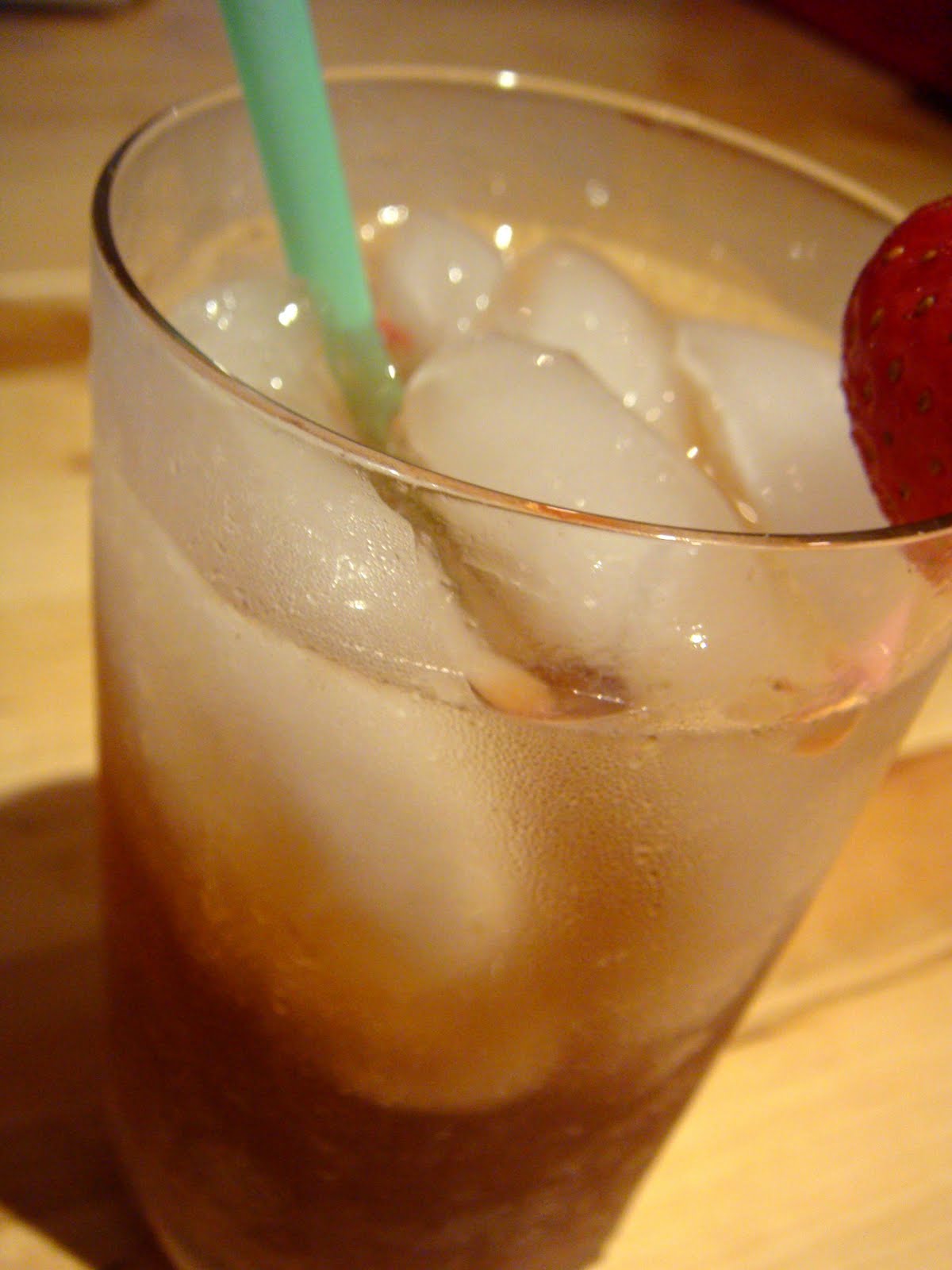
¡El Sangre de Fresa!


As a mixologist, I am always trying to push the limits. It's a lot harder to impress me, booze-wise, than it used to be. Lots of drinks that would've seemed wild and wonderful to me a couple of years ago are now familiar territory. Like, basil in a margarita? Child's play. But then, while browsing through one of my favorite cocktail books, I found a recipe for a drink using balsamic vinegar. Yeah, like what you dip bread in at Italian restaurants. Whoa.

I knew I had to try this.

Firstly, I love anything with balsamic vinegar, and secondly, I was having a cocktail party and wanted to impress my guests with my use of innovative, wacked-out ingredients. I could just see my friends telling their friends - "oh my gosh, I went to this party and this girl made a cocktail with balsamic vinegar and my mind was blown". This was going to be legendary. The one big hurdle was - in order to make this history-making balsamic cocktail, I first had to create a balsamic syrup, using the directions below:

Balsamic Syrup
1 1/2 cups sugar
1/2 cup water
1 1/2 cups balsamic vinegar

In a tall, straight-sided, medium pot, combine the sugar and water and heat over medium-high heat, stirring until the sugar dissolves. Brush down the sides of the pot with a wet pastry brush to remove any lingering sugar. Continue to cook the sugar and water, gently swirling the pot occasionally to distribute the heat, until the water evaporates and the sugar caramelizes and turns to an amber color.
Meanwhile, in a small saucepan, bring the balsamic vinegar to a simmer. When the caramel reaches the desired color, remove the pot from the heat and slowly add the balsamic vinegar. Take extra care when adding the vinegar, because it will bubble and pop violently when added to the caramelized sugar. Stir the mixture with a wooden spoon to dissolve any solidified caramel. Return the pot to the stove and cook over medium heat for about 5 minutes, until the mixture has thickened slightly.
Create an ice bath by filling a large bowl with ice water. Pour the syrup into a smaller bowl and then set it in the ice bath to cool, making sure the level of the melting ice is well below the level of the smaller bowl. Transfer the syrup to a small bottle with a lid and refrigerate. It will keep for up to six months or longer.


As a person who does not cook, I had the proper response to these directions, and that was: fear. Through people who actually cook I had heard of the difficulties and trials of making caramel, and I was very afraid. Only my desire for cocktail greatness could push me to attempt something so foolhardy. I wish I could say that my fears were totally unfounded, and that I created a perfect balsamic syrup on the first attempt. Only...not so much.

First try: burned the caramel.* I made the syrup anyway (because the balsamic vinegar was already simmering, and what was I gonna do?), but it was so thick it had to be scraped off the inside of the jigger when I tried to make a drink with it. Oh, and it smelled like burning.
*The only way to prevent this, I learned, is to not move from in front of the stove the entire time the caramel is cooking. In fact - don't even look away from the pot. Caramel burns fast.

Second try: used a pot that was too big.** All the water cooked off before the sugar caramelized and I ended up with...damp, slightly browned sugar. Fail.
**That part about the medium-sized pot? That's important.


Third try: Added too little balsamic vinegar (either I measured it wrong or let it simmer for too long - either way, I'm a moron) and ended up with some kind of giant, unholy balsamic caramel candy-thing. It was liquid until I put it in the ice bath, and I was so sure I had finally succeeded. Poor, disillusioned Nancy. I came back half an hour later to discover that in the ice bath, my "syrup" had congealed into a metallic brown brick at the bottom of the bowl.*** It was exactly like one of those brach's caramel candies I used to eat as a kid - except it smelled like italian food. And looked like an oil spill. (I say "smelled". I ate an octopus once - it wasn't fried or anything, and you could still see its tiny octopus head and tiny suckers on its tiny octopus arms - but I wouldn't eat this.) Giant, gooey, caramel-y fail.
***Important: pay attention to the part that says "thickened slightly". Don't worry if the syrup is still runny in the pot - it will get syrupy in the ice bath. If the syrup is syrupy in the pot - you will end up with a brick, like I did.

Yummy.

Fourth try: Finally got it right. Holy crap, this was hard.

So at long last, I was ready for:
¡El Sangre de Fresa! (that's "Strawberry Blood", for those of you who do not speakee the Spanish)
recipe from Jeff Hollinger and Rob Schwartz, of the Absinthe Brasserie & Bar in San Francisco.
2 strawberries, hulled and quartered
4 to 5 basil leaves (thank you, backyard herb garden)
1/2 oz hard-fought balsamic syrup
1 1/2 oz cachaça*
1/4 oz Cointreau**
1/4 oz fresh lime juice***
Soda water

*What is cachaça? Glad you asked.
**Or you can be cheap and use triple sec, like I did.
***Fresh!!


In a mixing glass, combine the strawberries, basil and balsamic syrup

and muddle into a pulp.

Top with ice and add the cachaça, Cointreau, and lime juice. Shake until cold, strain into an ice-filled pilsner or collins glass,

and top with soda water.

The first time I made this drink was for my cocktail party, so I made a whole pitcher, which was very brave of me. Many of my friends tasted it, which was very brave of them.

Kassie: This tastes like a salad.
Me: Drinks like a meal.
Aimee: ...interesting.
Garret: You know? I really like this.

So at the end of the night I sent Garret home with a schweppes bottle full of sangre de fresa. It's the first time I've ever made a doggie bag at a cocktail party. He seemed delighted with it.
But before you write this off as That Drink That Only Garret Liked - know that I made another. I had to, because I wanted to take purdy pictures for my blog and I hadn't gotten any in my pre-party frenzy. This time I shelled out for the Cointreau (my first bottle, and sheesh, was it expensive). Either this drink is bounds better with the Cointreau, or it just grew on me, because as I sipped Sangre de Fresa #2, I found myself thinking - you know, I might really like this. All the flavors are quite bold - the orange, lime, and strawberry catch you right away, with smoky/savory/vinegar on the finish. It's unexpected, bizarre, and - dare I say - surprisingly delicious.

Friday, October 22, 2010

Wtf is Cachaça?

Short answer: cachaça is like rum, but from Brazil.

Long answer: you knew I would give you the long answer, didn't you?


First things first: how in the world does one say "cachaça"? For a long time (I am now embarrassed to think about this) I pronounced this word as "kuh-CHAH-kuh", and nobody corrected me because apparently no one else I know knows how to pronounce it, either. Finally, for this blog post, I consulted that greatest of all authorities, the internet. I've always said that Portuguese is like Spanish, but smooshier, and the word "cachaça" is no exception. Turns out the little thing that looks like a 5 under the last c (it's called a "cedille") alerts you that the c is a soft sound, so the word is actually pronounced "ka-SHAH-suh". Which will make you sound very sexy. Or, just like you have a lisp. Try this out early in the morning, when your sleepy voice is operating at a nice alto. (Or bass, or whatever. Does this happen to anyone else? I swear my voice is like an octave lower for about an hour after I wake up.) Ka-SHAH-suh. Ka-SHAH-suh. Kashahsuh. Kashahsuhhhh.

Kashahsuhhh is the third most consumed spirit in the world, because there are a lot of people in Brazil, and they like to drink. (The first and second are vodka - because there are a lot of people in Russia, and they really like to drink - and soju/shochu, an Asian spirit distilled from rice. (Which I have never, ever heard of, which probably means it will be the Next Big Thing on the cocktail scene.)) Cachaça differs from rum in that it's distilled from fresh sugarcane, whereas most rum is distilled from molasses. Molasses is a by-product of sugar production - it's what's left after the refineries boil the cane juice as much as possible to extract all the sugar crystals, because sugar producers are greedy bastards.


A great deal of cachaça is consumed in the form of caipirinhas. The caipirinha (kai-pur-EEN-ya - another sexy, unpronounceable word) is the national drink of Brazil. It's made of: lime, sugar, and cachaça. That's all. So, you might think - if cachaça is brazilian for rum, and a caipirinha is just cachaça, lime, and sugar - isn't that just a mojito, without the mint? I once thought this, too. And I was wrong.

See, because of the whole being distilled from fresh sugarcane juice thing, cachaça (according to the leblon cachaça website) has a "fruitier, fresher nose" and "distinctive vegetal notes remniscent of tequila". Well, I don't know what a nose is supposed to taste like, but I think this calls for...a taste test!

First the smell:
Rum: sweet, boozy, clean.
Cachaça: it smells like tequila. That's what I keep thinking of.

Then the taste:
Rum: Probably my $12 bottle of Baccardi was not really intended for sipping. But here are my impressions: Sweet, warm, almost like baked goods. Nice alcohol burn. This is hard liquor, after all.
Cachaça: Starts out sweet, like the rum, and then explodes into a whole bouquet of...something. (I'm seriously thinking about becoming a sommelier, if only to enlarge my vocabulary to describe taste sensations.) A bit smoky, a bit vegetal - it doesn't taste quite like tequila, but it's got that little extra something that makes tequila not quite as well-behaved as the other liquors. It's rich, robust, and unabashed. Like rum, but...manlier.

Lastly, because your cachaça education would not be complete without it, I give you...the caipirinha.

To start: take a lime and slice the ends off. Cut it in half, and remove the pith from the middle. (This part is bitter, so removing it will make for a sweeter drink.)
Cut the halved lime into four slices, and put them in a glass, along with two teaspoons of superfine sugar.
I once thought superfine sugar and powdered sugar were the same thing, but...I was wrong. Superfine sugar will dissolve completely, giving you a nice translucent caipirinha, whereas powdered sugar will dissolve but make the drink cloudy. I used powdered sugar. Don't tell anyone.

Muddle the limes and sugar together until the limes are juiced. Fill the glass with crushed ice -
And add 2 oz of cachaça. Give it a couple of good stirs, and you're ready to start savoring.

Verdict: The lime is a good compliment to the unusual taste of the cachaça. Not quite like a margarita, not quite like a mojito...you may just have to try it for yourself.

Wednesday, October 20, 2010

Key Lime Margarita

Having a garden will teach you patience. You take care of the plants, and you watch them grow, and if you are lucky after a veeery long time they will produce something you can eat. Well, after many months of anticipation the three tiny, perfect key limes on my key lime tree finally ripened, and of course I started dreaming of cocktails.

Delicious with booze.

The first thing I thought of was a key lime martini - Steve had one once and couldn't stop talking about how great it was, and besides, it just sounded fun. So imagine my surprise when I discovered that a key lime martini contains no actual key lime juice. (Here's a compendium of three different key lime martini recipes...no key limes in sight.) 101 Margaritas to the rescue. Right there on the front cover is a lovely picture of a key lime margarita made with real key lime juice. Problem is, the original recipe called for something called McGillicuddy's vanilla schnapps, which your intrepid bartender was unable to find. So instead I substituted Navan, a vanilla liqueur made by the same folks who make Grand Marnier. It tastes divine, is very strong, and very expensive. But it's still vanilla flavored, right? And I had been looking for an excuse to buy a bottle of this stuff anyway.

So here goes:
Key Lime Margarita
1 1/2 oz tequila*
1 1/2 oz Navan vanilla liqueur
1/2 oz key lime juice (from the garden!)
1/2 oz simple syrup
splash of Midori melon liqueur (optional)**

*I prefer the gold in this recipe. Use good tequila - trust me, you will taste the difference.
**What's the Midori for? See, the difficulty here is that people expect margaritas to be green. And while the unfindable McGillicuddy's is presumably clear, Navan is brown. Adding a splash of Midori will give your margarita the appropriate color. Just don't add too much, or it will start to affect the taste.


Before you start: to give this drink a little added pizazz, rim the glass with vanilla sugar. (This isn't necessary, but it's super easy and I heartily reccomend it.) To make vanilla sugar, combine 1 teaspoon vanilla extract with 4 tablespoons of white sugar. This will make enough sugar for at least two glasses (and it will smell incredible). Then follow the instructions for coating the rim of a glass with sugar found here.


Combine the ingredients in a cocktail shaker filled with ice. Shake and strain into a glass. Or, stir the ingredients in a glass full of ice for thirty seconds, and let the glass sit on the counter for about a minute before straining into a glass. You want to give the ice a lot of time to melt with this one, because it is veeery boozy. Navan is 40% alcohol by volume, the same as most hard liquors, so this drink has the equivalent of two whole shots in it, about twice what you would expect. (Don't say I didn't warn you.) The water melting into the drink takes the edge of the liquor - it's what makes tequila taste like tequila and not like that burn you get when taking shots.

Not that there's anything wrong with taking shots.

Most cocktails are intended to be drunk chilled, without ice, but I give you permission to take this one on the rocks (since the ice will melt and further mellow out the drink). It's also a great candidate for a frozen drink. To make a frozen margarita, combine all the ingredients in a blender, and add a handful of ice cubes. Run the blender (you will probably need to use the highest setting), and keep adding a couple ice cubes at a time until you reach the desired consistency.

Sometimes being unemployed is really great.

Verdict: This is a most interesting drink. I keep making them to drink by the pool (in October? Only in Houston), and every time I have one I like it more and more. In fact, I am craving one right now. The margarita-ness gets you right away, whereas the vanilla slowly sneaks up on you before settling gently into your palette. I have to say I'm pretty proud of myself for making something that is 75% hard liquor taste so delicious. Drink it slowly - this will help you appreciate the vanilla more. It will also keep you from ending up on the floor.

Bottoms up.

How to rim a glass with sugar (or salt, as the case may be).

Coating the rim of a glass with sugar (or salt) will give your drinks that little extra something. (And it will make your pictures look cool, if you regularly photograph cocktails and are concerned about that kind of thing.) If the recipe calls for sugar, any old kind of sugar will do. If it calls for salt, use kosher salt - table salt doesn't have quite the right texture.

Step 1: Get out a plate and arrange the sugar in a circle corresponding roughly to the size of the rim of your glass.

Step 2: Moisten the rim of the glass with a lime (or lemon) wedge - whatever's appropriate to the drink. If your cocktail doesn't contain any lime or lemon, try using a sponge dipped in a liqueur (obviously, one that's already in the recipe - don't go too crazy here) or simple syrup. And don't be stingy with the juice.


Step 3: Dip the moistened glass in the circle of sugar. If you want more sugar, hold the glass perpendicular to the plate and gently roll the outside of the rim in the sugar. Then shake (or wipe) off the excess sugar and you're ready to go.

Yum.

Saturday, September 25, 2010

The Original

My neighbor Jessica came over one night. I offered to make make her a drink. She said she wanted something "not too sweet". Here's what I came up with:

The Original
1 oz St. Germain
2.5 oz Dry Lemongrass soda (possible substitute: perrier?)
Top with champagne.

Just sweet enough.

Jessica liked it a lot. Soon the glass looked like this:


And then like this:


Jessica also thought my photos could use a bit of variety, so she took these. Thanks, neighbor.

Thursday, September 9, 2010

The Dream Team

This week I did something very atypical, which is - I made a fantasy football team. This would seem, at first glance, to be absolutely foolhardy, since I know next to nothing about football. And seeing as the season has not actually begun yet, there are still plenty of chances for my team to be an epic failure. But, on Tuesday, with a lot of help from the football gal, I participated in my first draft, and now I've got what is (I think) a pretty decent team. I have Chris Johnson, and Steven Jackson, and Tom Brady (hot!)** and some guy named Jermichael. (As a person who strives to create cocktails which are innovative mashups of familiar ingredients - I appreciate this name.)

So, what I've learned thus far is: having a good team is really important. The other day I came across a cocktail that teamed up:
1. St. Germain
2. a margarita
3. cucumber
4. Fever Tree Bitter Lemon Soda*

*What?? This is a mixer that was recommended by loyal reader Rosann way back in the Pimm's Cup days. I had been wanting to try it.

That, my friends, is a good team. So, in (hopeful) anticipation of all the glorious beatings that will soon be delivered by my fantasy football team***, I mixed up one of these puppies.


The Escapology
(from the Burger Bar in San Francisco, via sfist)
1.5 oz silver, un-aged tequila
.5 oz St. Germain
3/4 oz simple syrup
1 oz lime juice (fresh squeezed!)
4 thin slices of cucumber (farmers' market!)
Fever Tree Bitter Lemon Soda

In a shaker, muddle the cucumber slices with a splash of the simple syrup. Fill the glass with ice and add the remaining ingredients, except for the soda. Shake, strain into a glass over ice, and top with soda. You don't want to add too much soda or the drink with get too bitter. I poured mine into an old-fashioned glass with a handful of ice in the bottom and then filled with the soda, and that was just perfect.

Verdict: Sweet, summery, and delicious. Surprisingly, tastes not very much like a margarita. Tastes not very much like booze, either (although I sometimes worry that my definition of "tastes like booze" is not quite that of a normal person, since many drinks that I would describe as simply "tasty" are described by other people as "really, really strong"). Not that that's a bad thing. There's this delicate interplay of lime, cucumber and tequila flavors going on, and the soda makes it light and refreshing. With a lineup like this, it's hard to go wrong.

**Update: Tom Brady is still hot, but my gosh, what the hell is up with his hair? Get a haircut, Tom. You're embarrassing the team.
***Another Update: As of monday night, the first of these beatings was officially delivered. Cheers.

Monday, August 30, 2010

MxMo the First: The Summer Old-Fashioned

Before there was the Backyard Bartender, there was Mixology Monday. Every month, mixologists from all over the globe (I am not lying - this month there's one from Germany) create drinks to fit a particular theme. I stumbled across the site one day while looking for a recipe and was immediately delighted and awed and overwhelmed. It was like I was a cocktail adventurer standing on the edge of the cocktail Grand Canyon - it was so beautiful, and there was so much out there, and I could not possibly explore it all. But I wanted to try.

This is the first mixology monday since the inception of the backyard bartender (so I guess sometimes it's not every month), and the theme (and the host blog) is Brown, Bitter and Stirred. Make a drink that is brown, possibly because it is made with some kind of brown liquor, and...tastes bitter and is stirred. (I might have cheated a little on the "bitter" part. I am still learning to like bitter things. I do not yet have the palate to appreciate, say, campari, which other people seem to think is wonderful. But my cocktail contains bitters, so...that's a start?)

Of course when I think "brown", I think bourbon, my very favorite of the brown liquors. Problem is, when I think bourbon, I do not think summer. More like, sitting around a campfire trying desperately to stay warm. That's what bourbon is to me. Unfortunately, although in some places the weather may have started to resemble that lovely season they call "fall", here in Houston it is still hotter than hell. The other day I got into my car and the thermometer read 112 degrees. I think the last time I saw a thermometer reading 112 degrees was at the bottom of the Grand Canyon. (Or, y'know, just last summer. It gets hot here.) (Also: second Grand Canyon reference in one post. I love the Grand Canyon.)

You know what else I love? Bourbon.

So how could I summer-ify bourbon? Here was my thought process: I have, in the works (meaning: the idea is in my head), another drink involving apples and lavender, because the internet told me this was a good flavor pairing and I am dying to try it out. I thought about adding bourbon to the mix, since I knew that bourbon and apples were good together - Dale Degroff says so. (Also: bourbon + apple cider is a winner.) So the only question was - bourbon and lavender? Well, a google search yielded enough intriguing results to make me think I was on the right track. (The bourbon french toast with lavender butter? Must. try. now.)

I wasn't really sure about trying to pass off a drink with apple in it as "bitter", so instead I turned to our old friend, the old-fashioned. (The exact recipe for an old-fashioned is one of those things that cocktail geeks always argue about, but everyone seems to agree that the basics are: bourbon, sugar, orange, (in some capacity) and bitters.) What I was going for was an old-fashioned that was was light and a bit floral, but still tasted like an old-fashioned. After a few tries (okay, maybe a lot of tries) I got it right. Here it is:

Lavender Old-Fashioned
1.5 oz bourbon (or 2 for a stronger bourbon flavor)
.5 oz fresh-squeezed orange juice
.5 oz St. Germain elderflower liqueur*
1 oz Dry lavender soda**
dash of angostura bitters

*I know I'm a little behind the game, but I just discovered St. Germain and I have been putting it in pretty much everything. This blog calls it "the bacon of the cocktail world" (because it goes with everything), which I think is both funny and true.
**Tried this originally with muddled lavender greens from the garden and was unconvinced. (My lavender, the "Goodwin Creek" variety, stands up well to our crazy heat but inexplicably never blooms, so all I have to work with are the greens.) So the only local ingredient here is the garnish. I promise to try harder next time.


Mix all ingredients but the soda in an old-fashioned glass full of ice. Stir lovingly for 30 seconds. Add the soda. Garnish with an orange slice and a sprig of lavender.

Yum.