Showing posts with label cachaça. Show all posts

Monday, June 20, 2011

MxMo LVIII: Carmen Sandiego.

Ever since I spent all that time making a balsamic syrup for that one cocktail, I swore that some way, some how, I was going to use that stuff again. It was, understandably, a bit tricky; you can't put a syrup made from balsamic vinegar in just any drink. Enter, propitiously, this month's Mixology Monday, whose theme is "Niche Spirits" (with your host Filip at Adventures in Cocktails). I'd long been wanting to do a cocktail with a pear-balsamic pairing, so this seemed like the perfect time to bust out the Poire William. Poire William is a brandy distilled from pears (translation: a hard liquor, that tastes like a pear) that is a bit underloved in the spirit world, but for some reason crops up quite a bit in this blog. (You'll also see it called Poire William eau-de-vie (a French phrase meaning "water of life", applied to many liquors distilled from fruits), or just plain old "pear brandy".)


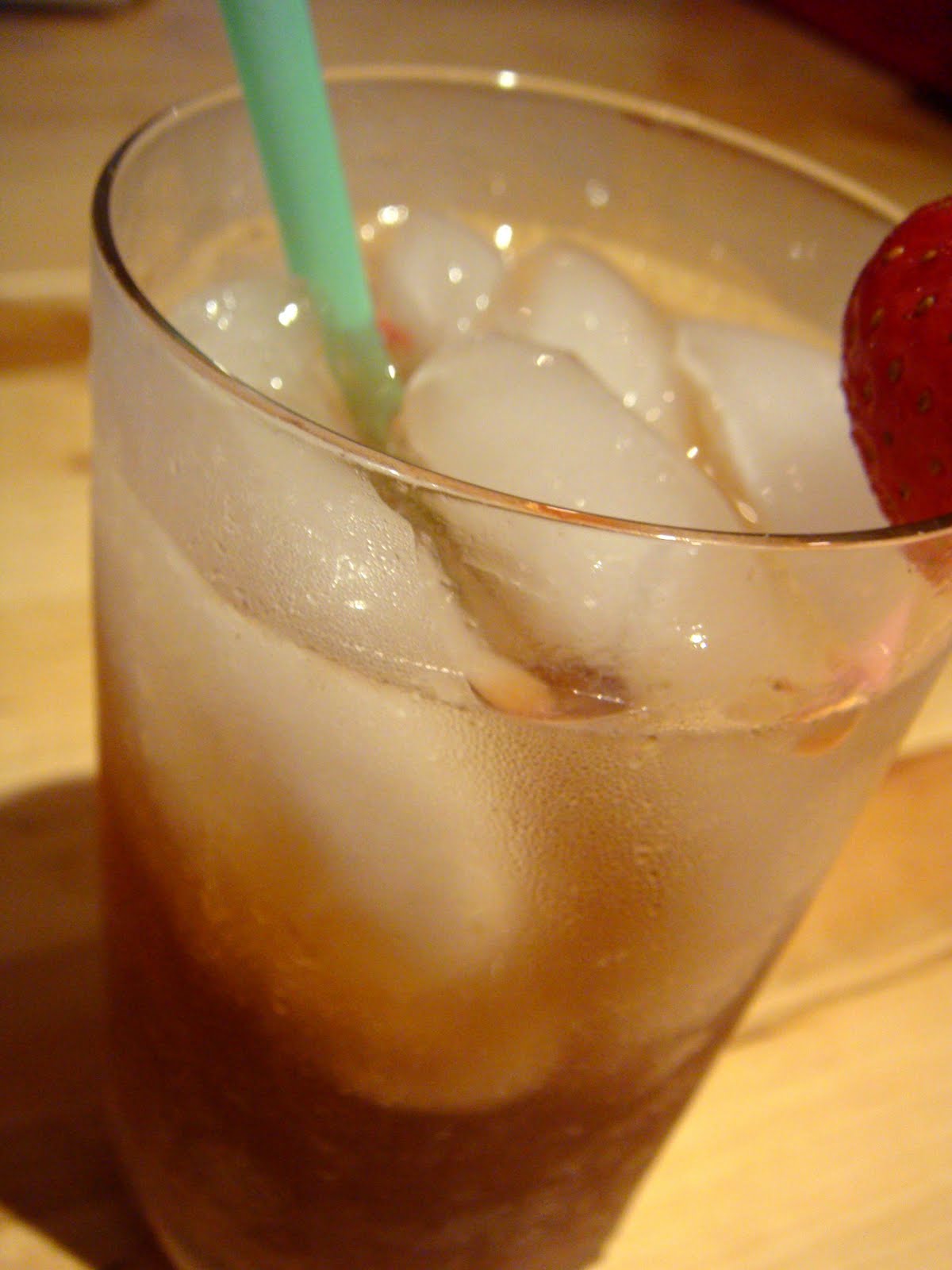
To this I added cachaça (another off-the-beaten path liquor, so my entry doubly qualifies), a bit of lime, Cointreau, and a dash of orange bitters, for good measure. (I borrowed a little bit from my original balsamic vinegar drink, and also from this delicious pear sour by Vincenzo Marianella, the man behind the Santa Monica cocktail bar Copa d'Oro.) I put it all over ice and added a little soda, because it's hot as hell here in Houston. (Average daily temperature: about 102 degrees. And I'm only exaggerating a little.)

Then there was the difficulty of what to call my creation. I always run into this problem - interesting drinks, with no idea what to name them. I settled on "Carmen Sandiego", since this cocktail contains ingredients pilfered from all over the globe - Poire William from Germany, cachaça from Brazil, balsamic vinegar from Italy, Cointreau from France, bitters from oranges harvested in the West Indes. And can't you just see Carmen enjoying a cocktail after making away with Machu Pichu?

I know I can.

Carmen Sandiego
1 oz Poire William eau-de-vie
1 oz cachaça
1/2 oz balsamic syrup (recipe here)
1/2 oz Cointreau
1/2 oz fresh-squeezed lime juice
dash of orange bitters
club soda

Combine all ingredients together in a cocktail shaker. Fill with ice. Shake and strain into an ice-filled highball glass. Top with club soda (about 1-1.5 oz).

Verdict: It's well-rounded, it's interesting, it's...zippy. Definitely zippy. No less than what you would expect from that sassy, bridge-stealing broad.

Monday, March 14, 2011

Mojito MADNESS.

Some of you may not know this, but the mojito is really the drink that started it all. One summer night, circa 2008 - four good girl friends, a little bit of peppermint, a bottle of rum, and my first-ever batch of simple syrup came together to make some very, very delicious mojitos. And probably the most fun I've ever had on a week night. I was hooked. On mojitos, and on mixing drinks.


So, recently, I decided to re-visit the mojito. And, just to shake things up a little, to make a mojito variation with every kind of clear liquor in my kitchen. But first, I needed to establish a base recipe for the mojito. Now, I can be a little bit of a stickler for the rules. Especially when it comes to cocktails. I mean, classic is best, right? So I first turned to the oldest known recipe for a mojito, from a 1929 Cuban cocktail book called, appropriately, El Libro de Cocktail, and helpfully re-printed in Food & Wine magazine's "cocktails '09". Also helpfully reprinted right here:

The Original Mojito
8 mint leaves
2 oz white rum
3/4 oz fresh lime juice
1 oz simple syrup
1/2 oz chilled club soda


I made a mojito, just as the 80-year-old recipe said. It was pretty, to be sure. I took many pictures of it. But I tasted it and I was...underwhelmed. I longed to return the the mojito that first captured my heart that summer night. So I made another mojito, according to my old recipe. I took a sip...delicious. Feels like the very first time.

"What is the secret of this fantastic mojito?" - you must surely be asking yourself. Two things: 1. turbinado simple syrup. Just like it sounds - simple syrup made with turbinado sugar, 1:1. 2. peppermint. Spearmint is pretty much the gold standard for mint in cocktails - every bar I've ever been to uses it for their mojitos, so that's what I used to make the classic mojito. But the drinks from the infamous Night of the Mojitos were made with peppermint, which imparts a stronger mint flavor. For the recipe printed below, I used half and half, and the result was lovely. Where can one find peppermint? I grow mine myself. You can tell the difference between the two varieties by the shape of the leaves, and, of course, by the way they smell.

peppermint vs. spearmint.

Nancy's very special mojito
8 mint leaves (4 spearmint, 4 peppermint)
1.5 oz rum
.75 oz fresh-squeezed lime juice
.5 oz turbinado simple syrup
1 oz soda water

Place the mint leave in the bottom of a shaker, cover with the simple syrup, and muddle. Add the lime, rum, and 5-6 ice cubes, and shake and strain into a highball glass filled with crushed ice. Top with the soda water.

I'll be damned is this is not the best mojito I've ever had.

So now that we've established a basic recipe for the mojito, it's time to get crazy. First up, the mexi-jito - a mojito made with tequila. Luke, an inventive drinker and a particular fan of tequila, gave me the idea for this one.


Mexijito
8 mint leaves (half and half)
1.5 oz silver tequila
.75 oz lime juice
.5 oz agave nectar
1 oz soda water

Verdict: Oh, it's good. The combo of tequila and mint is wonderfully smooth, and almost, just a teeny tiny bit, reminds me of chocolate. Interesting and delicious and refrescante. Definitely worth a try.

Next: A mojito with cachaça. Since cachaça and rum are so similar, substituting cachaça for rum in a mojito seems pretty logical. Plus, the caipirinha, the most famous cachaça drink out there, is essentially just a mojito without mint, right?

Brazilian Mojito
8 mint leaves (half and half)
1.5 oz cachaça
.75 oz lime juice
.5 oz turbinado simple syrup
1 oz soda water

So...I now understand why the Brazilians don't put mint in their caipirinhas. It's because cachaça and mint is...well, kinda gross. The vegetal flavors of cachaça don't play nice with the mint like rum does. I still finished the drink -but it was my least favorite of all the alterna-mojitos. Since I played it safe with this one, next I decided to try something really unusual: a mojito with poire william eau-de-vie, a brandy made from distilled pears.


The Peppermint Pear
12 mint leaves (6 peppermint, 6 spearmint)
1.5 oz poire william eau-de-vie
1 oz lime juice
.75 oz simple syrup
1 oz soda water

I guess I shouldn't be surprised that this turned out like a mojito...that tastes like pear. Actually, come to think of it, it's more like the other way around. Even with the amount of other ingredients increased, pear is the overwhelming taste sensation here, with the mint and lime as mere grace notes. I'm still not sure how I feel about that. Suffice it to say, though, that if you like pear, and you like mojitos...you will love the hell out of this. If you're not such a huge fan of pear, but you still happen to have the brandy around , try half pear brandy, half light rum.


What about...a mojito with gin? This is another Luke invention. Once, at a party, long ago, I was making mojitos when I ran out of rum. What to doooo? Luke suggested making some with gin. I remembered them being pretty good. I remembered right.

The Gin-jito
8 mint leaves (4 peppermint, 4 spearmint)
1.5 oz gin
.75 oz lime juice
.5 oz simple syrup
1 oz soda water

It's delicious and refreshing, in that very clean, juniper-y way that gin is. And lastly: an unusual combination that totally blew my mind. Alicia was the one who suggested making a mojito with mezcal - she had something like it at the Anvil once.


The Smo-jito (It's a smoky mojito. Get it?)
8 mint leaves
1.5 oz joven mezcal
.75 oz lime juice
.5 oz agave nectar
1 oz soda water

Oh. My. Gosh. Definitely my favorite of all the mojito variations. Nice strong agave flavor, delicious smoke making love to lime and mint. I don't know what I did to deserve this, but whatever it was, I must've been very good.

Saturday, October 23, 2010

¡El Sangre de Fresa!


As a mixologist, I am always trying to push the limits. It's a lot harder to impress me, booze-wise, than it used to be. Lots of drinks that would've seemed wild and wonderful to me a couple of years ago are now familiar territory. Like, basil in a margarita? Child's play. But then, while browsing through one of my favorite cocktail books, I found a recipe for a drink using balsamic vinegar. Yeah, like what you dip bread in at Italian restaurants. Whoa.

I knew I had to try this.

Firstly, I love anything with balsamic vinegar, and secondly, I was having a cocktail party and wanted to impress my guests with my use of innovative, wacked-out ingredients. I could just see my friends telling their friends - "oh my gosh, I went to this party and this girl made a cocktail with balsamic vinegar and my mind was blown". This was going to be legendary. The one big hurdle was - in order to make this history-making balsamic cocktail, I first had to create a balsamic syrup, using the directions below:

Balsamic Syrup
1 1/2 cups sugar
1/2 cup water
1 1/2 cups balsamic vinegar

In a tall, straight-sided, medium pot, combine the sugar and water and heat over medium-high heat, stirring until the sugar dissolves. Brush down the sides of the pot with a wet pastry brush to remove any lingering sugar. Continue to cook the sugar and water, gently swirling the pot occasionally to distribute the heat, until the water evaporates and the sugar caramelizes and turns to an amber color.
Meanwhile, in a small saucepan, bring the balsamic vinegar to a simmer. When the caramel reaches the desired color, remove the pot from the heat and slowly add the balsamic vinegar. Take extra care when adding the vinegar, because it will bubble and pop violently when added to the caramelized sugar. Stir the mixture with a wooden spoon to dissolve any solidified caramel. Return the pot to the stove and cook over medium heat for about 5 minutes, until the mixture has thickened slightly.
Create an ice bath by filling a large bowl with ice water. Pour the syrup into a smaller bowl and then set it in the ice bath to cool, making sure the level of the melting ice is well below the level of the smaller bowl. Transfer the syrup to a small bottle with a lid and refrigerate. It will keep for up to six months or longer.


As a person who does not cook, I had the proper response to these directions, and that was: fear. Through people who actually cook I had heard of the difficulties and trials of making caramel, and I was very afraid. Only my desire for cocktail greatness could push me to attempt something so foolhardy. I wish I could say that my fears were totally unfounded, and that I created a perfect balsamic syrup on the first attempt. Only...not so much.

First try: burned the caramel.* I made the syrup anyway (because the balsamic vinegar was already simmering, and what was I gonna do?), but it was so thick it had to be scraped off the inside of the jigger when I tried to make a drink with it. Oh, and it smelled like burning.
*The only way to prevent this, I learned, is to not move from in front of the stove the entire time the caramel is cooking. In fact - don't even look away from the pot. Caramel burns fast.

Second try: used a pot that was too big.** All the water cooked off before the sugar caramelized and I ended up with...damp, slightly browned sugar. Fail.
**That part about the medium-sized pot? That's important.


Third try: Added too little balsamic vinegar (either I measured it wrong or let it simmer for too long - either way, I'm a moron) and ended up with some kind of giant, unholy balsamic caramel candy-thing. It was liquid until I put it in the ice bath, and I was so sure I had finally succeeded. Poor, disillusioned Nancy. I came back half an hour later to discover that in the ice bath, my "syrup" had congealed into a metallic brown brick at the bottom of the bowl.*** It was exactly like one of those brach's caramel candies I used to eat as a kid - except it smelled like italian food. And looked like an oil spill. (I say "smelled". I ate an octopus once - it wasn't fried or anything, and you could still see its tiny octopus head and tiny suckers on its tiny octopus arms - but I wouldn't eat this.) Giant, gooey, caramel-y fail.
***Important: pay attention to the part that says "thickened slightly". Don't worry if the syrup is still runny in the pot - it will get syrupy in the ice bath. If the syrup is syrupy in the pot - you will end up with a brick, like I did.

Yummy.

Fourth try: Finally got it right. Holy crap, this was hard.

So at long last, I was ready for:
¡El Sangre de Fresa! (that's "Strawberry Blood", for those of you who do not speakee the Spanish)
recipe from Jeff Hollinger and Rob Schwartz, of the Absinthe Brasserie & Bar in San Francisco.
2 strawberries, hulled and quartered
4 to 5 basil leaves (thank you, backyard herb garden)
1/2 oz hard-fought balsamic syrup
1 1/2 oz cachaça*
1/4 oz Cointreau**
1/4 oz fresh lime juice***
Soda water

*What is cachaça? Glad you asked.
**Or you can be cheap and use triple sec, like I did.
***Fresh!!


In a mixing glass, combine the strawberries, basil and balsamic syrup

and muddle into a pulp.

Top with ice and add the cachaça, Cointreau, and lime juice. Shake until cold, strain into an ice-filled pilsner or collins glass,

and top with soda water.

The first time I made this drink was for my cocktail party, so I made a whole pitcher, which was very brave of me. Many of my friends tasted it, which was very brave of them.

Kassie: This tastes like a salad.
Me: Drinks like a meal.
Aimee: ...interesting.
Garret: You know? I really like this.

So at the end of the night I sent Garret home with a schweppes bottle full of sangre de fresa. It's the first time I've ever made a doggie bag at a cocktail party. He seemed delighted with it.
But before you write this off as That Drink That Only Garret Liked - know that I made another. I had to, because I wanted to take purdy pictures for my blog and I hadn't gotten any in my pre-party frenzy. This time I shelled out for the Cointreau (my first bottle, and sheesh, was it expensive). Either this drink is bounds better with the Cointreau, or it just grew on me, because as I sipped Sangre de Fresa #2, I found myself thinking - you know, I might really like this. All the flavors are quite bold - the orange, lime, and strawberry catch you right away, with smoky/savory/vinegar on the finish. It's unexpected, bizarre, and - dare I say - surprisingly delicious.

Friday, October 22, 2010

Wtf is Cachaça?

Short answer: cachaça is like rum, but from Brazil.

Long answer: you knew I would give you the long answer, didn't you?


First things first: how in the world does one say "cachaça"? For a long time (I am now embarrassed to think about this) I pronounced this word as "kuh-CHAH-kuh", and nobody corrected me because apparently no one else I know knows how to pronounce it, either. Finally, for this blog post, I consulted that greatest of all authorities, the internet. I've always said that Portuguese is like Spanish, but smooshier, and the word "cachaça" is no exception. Turns out the little thing that looks like a 5 under the last c (it's called a "cedille") alerts you that the c is a soft sound, so the word is actually pronounced "ka-SHAH-suh". Which will make you sound very sexy. Or, just like you have a lisp. Try this out early in the morning, when your sleepy voice is operating at a nice alto. (Or bass, or whatever. Does this happen to anyone else? I swear my voice is like an octave lower for about an hour after I wake up.) Ka-SHAH-suh. Ka-SHAH-suh. Kashahsuh. Kashahsuhhhh.

Kashahsuhhh is the third most consumed spirit in the world, because there are a lot of people in Brazil, and they like to drink. (The first and second are vodka - because there are a lot of people in Russia, and they really like to drink - and soju/shochu, an Asian spirit distilled from rice. (Which I have never, ever heard of, which probably means it will be the Next Big Thing on the cocktail scene.)) Cachaça differs from rum in that it's distilled from fresh sugarcane, whereas most rum is distilled from molasses. Molasses is a by-product of sugar production - it's what's left after the refineries boil the cane juice as much as possible to extract all the sugar crystals, because sugar producers are greedy bastards.


A great deal of cachaça is consumed in the form of caipirinhas. The caipirinha (kai-pur-EEN-ya - another sexy, unpronounceable word) is the national drink of Brazil. It's made of: lime, sugar, and cachaça. That's all. So, you might think - if cachaça is brazilian for rum, and a caipirinha is just cachaça, lime, and sugar - isn't that just a mojito, without the mint? I once thought this, too. And I was wrong.

See, because of the whole being distilled from fresh sugarcane juice thing, cachaça (according to the leblon cachaça website) has a "fruitier, fresher nose" and "distinctive vegetal notes remniscent of tequila". Well, I don't know what a nose is supposed to taste like, but I think this calls for...a taste test!

First the smell:
Rum: sweet, boozy, clean.
Cachaça: it smells like tequila. That's what I keep thinking of.

Then the taste:
Rum: Probably my $12 bottle of Baccardi was not really intended for sipping. But here are my impressions: Sweet, warm, almost like baked goods. Nice alcohol burn. This is hard liquor, after all.
Cachaça: Starts out sweet, like the rum, and then explodes into a whole bouquet of...something. (I'm seriously thinking about becoming a sommelier, if only to enlarge my vocabulary to describe taste sensations.) A bit smoky, a bit vegetal - it doesn't taste quite like tequila, but it's got that little extra something that makes tequila not quite as well-behaved as the other liquors. It's rich, robust, and unabashed. Like rum, but...manlier.

Lastly, because your cachaça education would not be complete without it, I give you...the caipirinha.

To start: take a lime and slice the ends off. Cut it in half, and remove the pith from the middle. (This part is bitter, so removing it will make for a sweeter drink.)
Cut the halved lime into four slices, and put them in a glass, along with two teaspoons of superfine sugar.
I once thought superfine sugar and powdered sugar were the same thing, but...I was wrong. Superfine sugar will dissolve completely, giving you a nice translucent caipirinha, whereas powdered sugar will dissolve but make the drink cloudy. I used powdered sugar. Don't tell anyone.

Muddle the limes and sugar together until the limes are juiced. Fill the glass with crushed ice -
And add 2 oz of cachaça. Give it a couple of good stirs, and you're ready to start savoring.

Verdict: The lime is a good compliment to the unusual taste of the cachaça. Not quite like a margarita, not quite like a mojito...you may just have to try it for yourself.